Save Audubon Park is a grass-roots citizens group formed in 2001 in reaction to the Audubon Nature Institute's plans to demolish, rebuild, and expand the historic Audubon Park Golf Course.
Save Audubon Park remains committed to the task of monitoring, reporting and, where possible, contributing to the ongoing planning and development processes in Audubon Park. History and current indicators suggest that this will be a continual trend towards privatization, commercialization and exploitation of this precious park land by forces whose sympathy for the public interest and the preservation of green space in this city is secondary to the dollars they believe can and should be reaped by developing these public properties instead.
| |
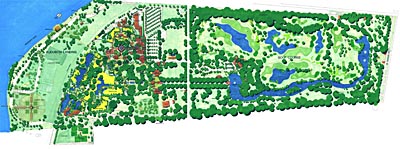
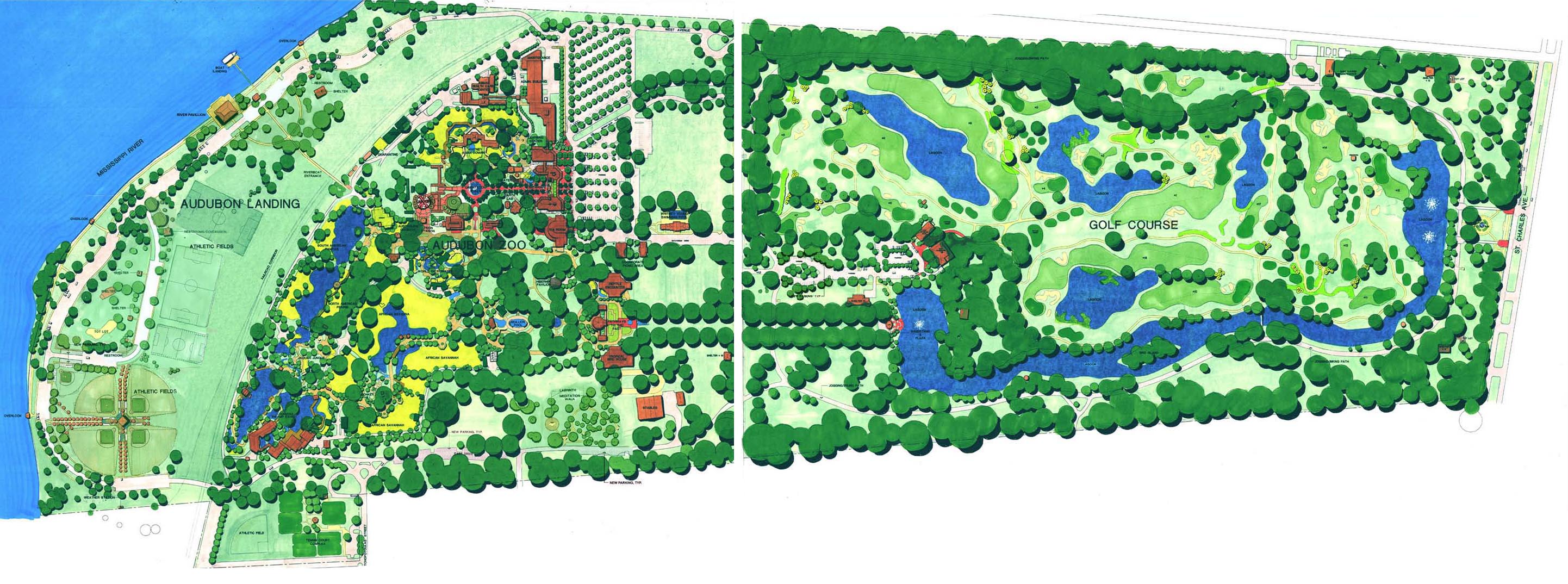
Audubon Park Master Plan circa 2005
| | The Big Picture | | Current Issues |
|
Our Primary Concerns
|
|
We remain concerned that the complacent composition of the public Audubon Commission, coupled with the unceasing profit agenda of the private Audubon Nature Institute, will mean that the Park's future will remain one of ad hoc and commercially-driven development not based on any consideration of the general public interest. Until a reconstituted Audubon Commission takes public input and accountability seriously, the ANI will continue to operate outside the purview of our city's zoning ordinances, land use plans, and alcoholic beverage laws.
|
|
Read More
|

|
|
Putting the 'profit' in non-profit?
|
(Updated Aug 2023) On August 17, 2023, the news broke that Ron Forman was going to retire from his lucrative position at the helm of the "non-profit" Audubon Nature Institute. Since he was paid a whopping $4,695,767 in compensation in 2021, perhaps retirement finally looked affordable?
Sadly, while Ron Forman's salary never wavered from its ever-rising trajectory, the rest of the employees of the Audubon Nature Institute haven't fared so well.
ANI's 2019 tax forms show 1384 employees, a peak for the organization, with "salaries, other compensation, employee benefits" totaling $30,471,144. But in 2020, the employee numbers had dropped to 966, and the "salaries, etc" number had dropped to $19,905,721. In 2021, the employee numbers had dropped yet again, to 659, although "salaries, etc" only dropped to $19,555,203—largely because "compensation of key employees" had gone up—surprise!—by Ron's $4+ million extra compensation, even though the "other salaries and wages" of the ordinary employees decreased by the same amount, to a low of only $10.5 million.
About Forman's excessive compensation, the 2021 ANI Form 990 dutifully states:
"Audubon Nature Institute, Inc. has a discretionary 457 Executive Retirement Plan for one of its officers, President and CEO L. Ronald Forman. The plan provides additional compensation based on years of service and estimated pay at retirement. The assets of this plan are owned by Audubon Nature Institute. The plan was developed in 2004 as a best-practices strategy to retain seasoned professionals in senior leadership positions.
During 2021, Ron Forman received a contribution of $142,081 to his 457 retirement plan. With the approval of the Audubon Nature Institute Board Compensation Committee, Mr. Forman received $3,913,194 in distributions from the 457 plan. The Committee accelerated the vesting requirement for a portion of the deferred compensation based on Mr. Forman's forty-eight years of service, the uncertain economic environment, and the desire to remove deferred amounts from the Institute's books. The payout represents 96% of Mr. Forman's deferred compensation, with the remaining 4% to be paid out at the end of his contract term. The distribution was properly reported on his 2021 W-2."
As CEO of the “private non-profit” Audubon Nature Institute, Ron Forman has always been paid far more than any comparable colleagues by a relentlessly wide margin. Consequently, we continue to be as surprised about this situation in 2023 as we were in 2002, when we first began to report it.
Ron Forman also receives his very substantial compensation—especially for a “non-profit” CEO—even when the organization he runs is struggling financially; even if he's actually spending his time doing something else; and even if the ANI has publicly stated that he has received a pay cut!
The ANI’s 2020 tax return confirms yet another false claim of a mythical Ron Forman pay cut—the third, by our count. On April 28, 2020, the ANI published a press release that stated: “While Audubon’s doors are closed to the public, dedicated staff are still onsite each day caring for the animals, which cost nearly $70,000 to feed each month. Unfortunately, because of the financial impacts of COVID-19, Audubon has reduced full-time staff by nearly 50 percent and reduced the salaries of some full-time employees by 25 percent. The salary reduction includes Audubon's executive team and CEO and President Ron Forman has taken a 50 percent pay cut.” (See newsroom.audubonnatureinstitute.org/audubon-nature-institute-projecting-to-lose-21-million--during-covid-19-closure)
However, Forman’s reported 2020 salary on the ANI’s 2020 tax return was $569,038 (plus $181,837 in other compensation, for a total compensation of $750,875), an increase from his 2019 salary of $563,453!
|
|
Read More
|
|
|
Audubon Golf Course's huge financial losses continue unabated
|
(Updated 2021) Every year since 2003, we have heard the claims by the Audubon Commission and Audubon Nature Institute that their still controversial “new” golf course is "a success!" When they demolished the original historic Audubon Golf Course in 2001, and began constructing the new course with $6 million mostly public dollars, the AC/ANI claimed the project was necessary in order to raise money for maintenance and support of Audubon Park. But every year when we dutifully update the financial numbers that are supposed to support the AC/ANI’s claims of "success" and "support for the park", we find mostly financial losses. Usually big ones.
For most of these years, we plugged in the Audubon Golf Course income/loss numbers directly from the Audubon Commission's audited financial statements posted on the Louisiana Legislative Auditor’s website. For the twenty years between 1995 and 2015, it was a simple process to determine each year's golf course losses because the facility had its own column in the public "Schedule of Revenues and Expenses” along with each of the other Audubon Commission facilities.
But starting in 2016, things changed, and not in a good way: suddenly, Audubon decided to stop treating the golf course as a separate facility, and began to hide the abysmal golf course numbers among the overall park and zoo numbers, so they would no longer be immediately detectable. No one on the Audubon Commission seems to know who authorized this change in their public records either.
So much for transparency by a public body that is supposed to be answerable to the public.
|
|
Read More
|
|
|
New Golf Facility Continues to Lose Money
|
[From 2003, updated 2007] Despite the ANI's claim that the new golf course was necessary to provide 'operational funds for maintenance of Audubon Park', their much-heralded new facility finished its first full year of operation (2003) firmly in the red, with a loss of $212,696, plus depreciation of $123,604 for a total Operating Loss of $336,300. Their 'not-a-restaurant' clubhouse food service, however, accounted for 24% of total revenue in 2003, far more than the 3% they had projected.
But even though the ANI quickly began renting the clubhouse as a private party rental facility, something they had vowed would never happen (see below), the golf facility has continued to lose money. In 2007, with operating revenues of $1,818,402 and expenses of $2,154,702, the Audubon Golf Course closed 2007 with an Operating Loss of $415,819.
|
|
Read More
|
|
|
Fact or Fiction?
|
|
Separating fact from fiction on Audubon's oft-repeated claim that they operate without receiving substantial public funding.
"Without receiving any operational support from public money ...we have significantly improved park services ..." (Ron Forman, letter to the Times-Picayune, 8-14-01)
|
|
Read More
|
|
|
The Clubhouse Cornerstone
|
|
From the outset, ANI officials doggedly insisted that the function of the new clubhouse was to provide facilities "for the comfort of users of the golf course". In a deposition from January 2003, Dale Stastny swore under oath that NO non-golf related functions would be allowed in the building, weddings and wedding receptions specifically would not be permitted in the clubhouse, and that if someone asked to hold such an event in the clubhouse, they would be told "no".
|
|
Read More
|
|
|
A Master Plan for Audubon Park
|
|
We believe that if a Master Plan for Audubon Park had existed before the golf course redevelopment was started, not only would there have been much less controversy, but the redevelopment would have been more sensitive to the interests of the wider park-going public.
The Audubon Commission and Audubon Nature Institute were in the process of developing such a plan before Katrina. However, we remain concerned that any plan will not ultimately protect Audubon Park from further unwarranted development brought on by the financial imperatives of its guardians, and at the expense of the passive green space, public accessibility and tranquility of this valuable urban oasis.
|
|
Read More
|
|
| |
|
The privatization of Audubon Park by the AC/ANI continues (2016)
|
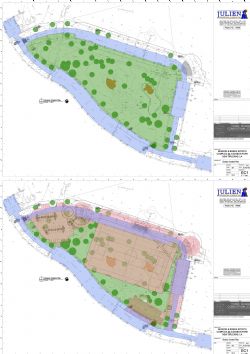
The Audubon Commission and Audubon Nature Institute are privatizing more public parkland under their control. Their latest "business-as-usual" project involves the further privatization of public park property—over which they have carte blanche—this time by expanding the land on the Fly/Riverview that is exclusively controlled by the Carrollton Booster Club. Without any public comment or input, the Institute entered into a CEA with the club to build the new "Benson-Brees Soccer Complex" on land that is currently open public park, to be managed and operated by the private Carrollton Booster Club for the exclusive use of its members. Not coincidentally, Gayle Benson, of the New Orleans Saints, and Storey Charbonnet, who heads the Carrollton Booster Club, are both current members of the Audubon Commission. In most cities, such an agreement would (and should) raise some eyebrows.
|
|
|
|
|
Children’s Hospital informs state it wants to buy New Orleans Adolescent Hospital (2012)
|
|
By Greg LaRose, New Orleans City Business, March 29, 2012
Children’s Hospital has notified the state that it wants to purchase New Orleans Adolescent Hospital, the adjacent mental health care facility that has been closed since 2009.
|
|
Read More
|
|
|
Dale Stastny retiring in 2011
|
|
The Times-Picayune reports that Dale Stastny, longtime COO of the Audubon Nature Institute, has announced his retirement at the end of 2011. But their description of Stastny as "Ron Forman's right-hand man" actually understates his role: when it came to the day-to-day running of the ANI over the past ten years, behind the scenes he has often seemed to do the work of BOTH of Ron's hands. In addition, even during contentious controversies over whatever project or development the ANI was plotting, Dale Stastny could usually be counted on to be unfailingly respectful and courteous to members of the public, even when they were the vocal opposition. We often wondered over the years how he put up with doing so much of the real work for less than half of Ron Forman's whopping compensation...
Ironically, when asked which ANI project has been "most satisfying", he apparently cited the redeveloped Audubon golf course, a project that has LOST an average of $450,000 a year since the start!
|
|
Read More
|
|
|
Children's Hospital looking to acquire New Orleans Adolescent Hospital property
|
|
By Bill Barrow, The Times-Picayune, April 16, 2010, 12:05PM
Children's Hospital and Louisiana State University are in talks over an agreement that would allow the Uptown medical facility to expand into the shuttered New Orleans Adolescent Hospital campus.
Children's spokesman Chris Price said the talks have progressed enough for Children's to discontinue its pursuit of 5.5 acres next to Audubon Park, a plan that has sparked considerable resistance from residents of the area.
|
|
Read More
|
|
|
Children’s Hospital in meaningful negotiations with state to acquire former NOAH property
|
Media Advisory sent out by Brian Landry of Children's Hospital, Friday, April 16, 2010:
NEW ORLEANS - Children’s Hospital and the state of Louisiana, through LSU, have renewed discussions regarding a possible purchase or lease by Children's Hospital of the former New Orleans Adolescent Hospital (NOAH) property.
Children’s Hospital has previously explored the possibility of acquiring the former NOAH property and is encouraged by these recent talks. For the past several months Children’s has been in negotiations with the Audubon Commission to acquire use of land between the hospital and Audubon Park for expansion purposes. In light of these recent discussions with LSU, efforts to acquire use of the land between the hospital and the park have been discontinued.
|
|
|
|
|
What we learned at the District A Master Plan meeting... (2010)
|
First, and most important, the new Master Plan adopted in 2010 does nothing to protect our public parks from development. If this protection ever comes, it will be as part of a new comprehensive zoning code, which is possibly five years in the future, by which time there may be nothing left to save if the current rate of development is any indication.
Second, there is apparently vast confusion at City Hall as to who in fact owns and controls certain parcels of land that are historically a part of Audubon Park. This does not bode well for any positive outcome.
We don't know exactly where the confusion lies, but it seems unlikely that the question is whether the Audubon Commission can own property separate from its role to "administer, operate, and maintain" city property as per the Home Rule Charter. Section 5-802 (pp 150-151) of the Home Rule Charter of the City of New Orleans reads...
|
|
Read More
|
|
|
Zoning and Master Plan questions about the Children's Hospital Development (2010)
|
.jpg)
In a WWLTV interview January 19, 2010, Children’s Hospital Vice President of Marketing Brian Landry is quoted as saying “What we're talking about is land that's adjacent to this campus that's always been zoned for medical services. The initial master plan was always to develop that site.”
This mysterious Master Plan to which Mr Landry refers is certainly not the Master Plan developed by the Audubon Institute under public pressure between 2000 and 2004, shown on this site's home page, and not the new city Master Plan that has been in development with extensive public input since 2005, shown here. The land use and zoning map pictured here, dated January 6, 2010, is the Master Plan and Zoning map that the New Orleans City Planning Commission approved on Jan 26, 2010, after almost 2 years of work and a $2 million investment. On this map, it shows the land correctly zoned as park, appropriate both to its historical use and its ownership by the city's Audubon Park Commission since 1949.
|
|
Read More
|
|
|
A new threat to Audubon Park, that would mean more park land lost forever to development
|
.jpg)
The Audubon Commission is considering a plan to give part of Audubon Park to Children's Hospital for development. The project will include at least two additional buildings ranging from 2-6 stories and a parking lot. This would mean that they would take over the portion of Audubon Park which is now the tennis courts on Tchoupitoulas and Avenger Baseball/soccer field and stretch all the way to to the street alongside the Zoo and Exposition Blvd. (East Drive), and will also stretch from Tchoupitoulas all the way to the levee. The tennis courts would then have to be moved to what is now green space on the Fly.
|
|
Read More
|
|
|
|

)
.jpg','','width=1200 height=965',''))
.jpg','','width=1000 height=726',''))